
What is EV charger installation for flats and rented homes?
EV charger installation for flats and renters starts with the parking rights, permission and electricity supply as well as the charger. A tenant with a driveway may need a straightforward wall unit and written landlord consent. A leaseholder’s bay in a shared car park can involve a longer route, a managing agent and a separate decision about who pays for the electricity.
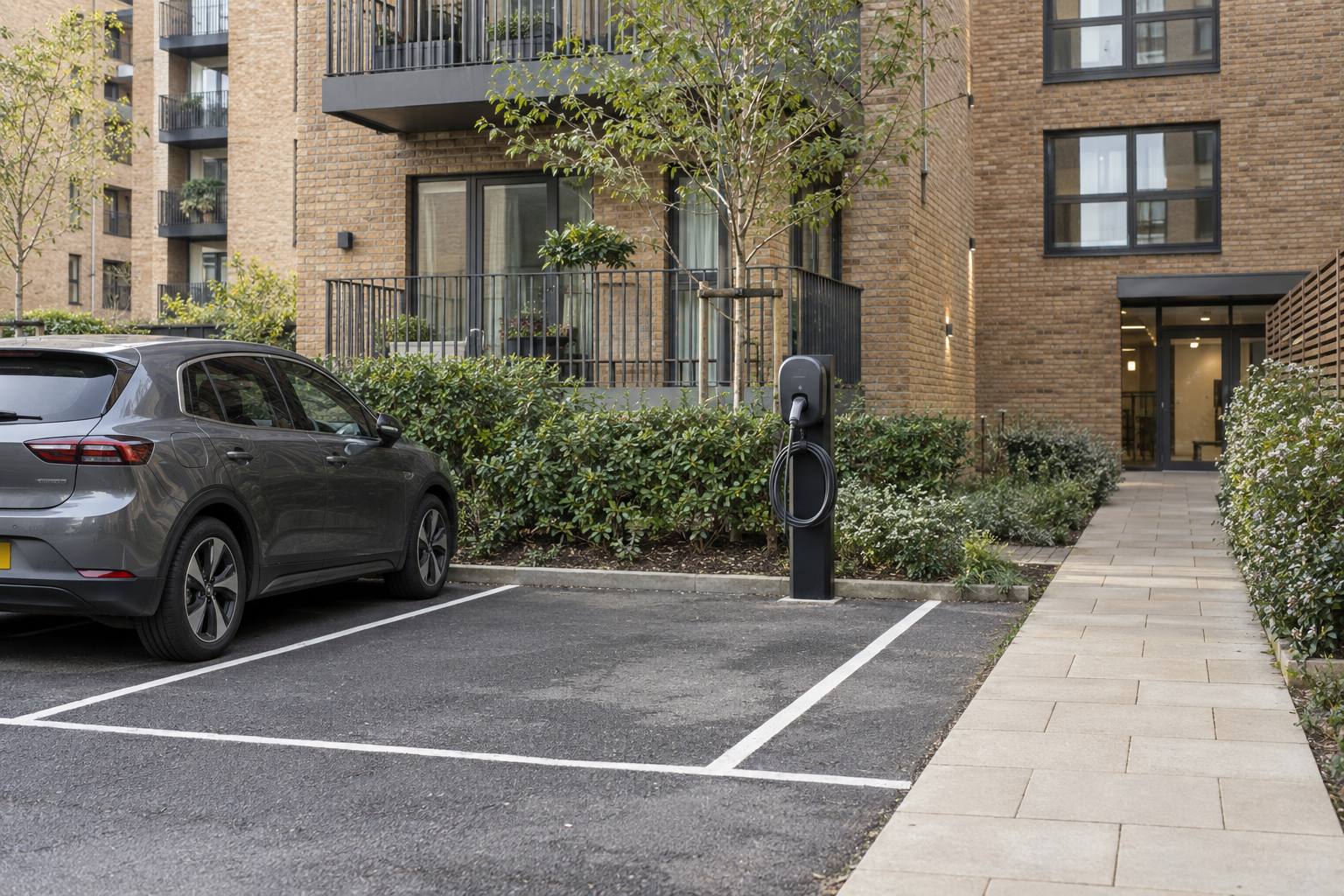
Signs you need EV charger installation for flats and rented homes
- You rent a house with a driveway and want an agreed charging installation.
- You own a flat with an allocated or owned parking bay.
- Your managing agent needs a proposal for cabling through communal areas.
- Residents want to assess one charger now while allowing for more bays later.
What the survey should cover
A charger may use the individual flat’s supply or a suitable communal supply with agreed metering and billing. Long routes can need larger cables, containment or groundworks. The design must preserve fire separation at penetrations and allow safe access for maintenance. Do not arrange work in shared electrical cupboards without the authorised access arrangements.
Preparing a useful enquiry
Explain your tenancy or lease position, identify the bay and say whether consent has been requested. Include an approximate distance from the meter to the bay and any communal floors, corridors or car-park surfaces on the route.
London properties range from short driveway runs to garages behind terraces and bays beneath apartment blocks. Give the installer the actual route and access details. You can photograph visible equipment with its covers closed; do not open electrical equipment to collect information.
Indicative London installation costs
The service guide range is £1,000–£3,500 for supply and installation before any grant. It is an estimate, not a fixed quotation or a maximum. Confirm VAT, the model and all exclusions in the written price. The guide is for a single chargepoint with a feasible route. A communal distribution system, several bays, a new supply, legal consent fees or extensive fire-stopping can cost more and should be priced separately. Ask about ongoing billing, maintenance and connectivity fees.
From survey to handover
- Confirm parking rights, ownership of the route and who must approve alterations.
- Survey the individual or communal supply and agree how electricity use will be billed.
- Prepare the drawings or method statement requested by the landlord, freeholder or managing agent.
- Arrange required approvals and any grant application before installing the agreed containment, circuit and charger.
- Reinstate fire-stopping and disturbed surfaces, test the installation and supply records for the resident and building manager.
Typical on-site work is around 1–3 days, depending on the agreed scope. This does not include time waiting for consent, parts or network work. Agree any power interruption and who will complete making-good before the visit.
Permission and grant applications are separate steps
Get the required written consent and agree who owns and maintains the charger if you move. Check GOV.UK chargepoint grant eligibility and use an appropriately authorised installer where a grant claim requires one. Confirm application timing before work begins. A grant does not override a lease, provide parking rights or pay for every part of a communal system.
Electrical checks and permissions
A new domestic charger circuit is notifiable work under Part P. Ask how the installer will arrange Building Regulations compliance, usually through a registered competent person scheme or the appropriate building control route. You should receive an Electrical Installation Certificate and the relevant compliance documentation. Approved Document P explains the requirements; scheme registration and electrical certification are not the same as grant authorisation.
The installer should identify the relevant network operator and arrange notification or prior approval as needed. UK Power Networks chargepoint guidance explains its process. A looped supply or a proposed capacity change can affect the timetable; obtain a specific answer about any charges rather than assuming all associated work is free.
Check the necessary landlord, freeholder and planning consents for the proposed position. Listed buildings and installations affecting shared land need particular attention. If you only have street parking, ask the council about public charging or an approved cross-pavement scheme; a loose lead over a footway is not a standard installation arrangement.
Request quotes from London installers
Use one free enquiry to ask for up to four quotations, subject to availability. Ask each business about similar installations, insurance and the support offered after commissioning.
EV Chargers London is a consumer matching service. We do not carry out installations or employ the electricians who quote. Companies joining the network are asked to provide relevant insurance details and references. You choose the installer and contract with that business directly.
Frequently asked questions
Can a flat’s charger use the communal supply?
Sometimes, with the building owner’s agreement and a suitable electrical design. Metering, billing, capacity, access and responsibility for maintenance must be settled before installation.
Can tenants request an installation?
Yes, but the necessary written landlord consent and any other property approvals must be obtained. Agree ownership, maintenance and what happens at the end of the tenancy before the work starts.