
What is home EV charger installation?
Home EV charger installation brings a dedicated charging circuit to a driveway, garage or private bay. The job includes choosing a practical wall position, checking the electricity supply and fitting a chargepoint with the protection its design requires. It is also a chance to agree how visible the cable route will be and who will repair any disturbed surfaces.
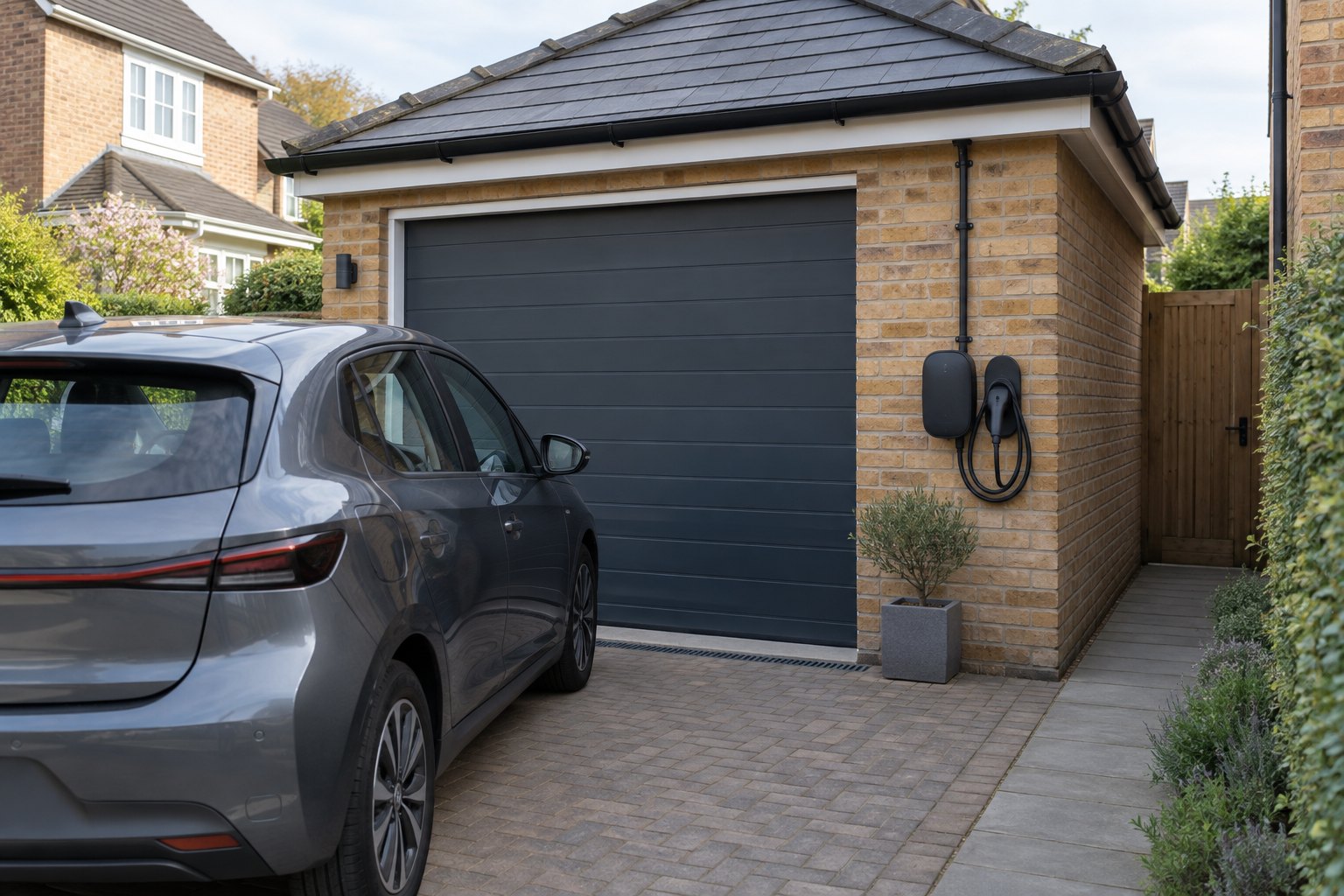
Signs you need home EV charger installation
- You are taking delivery of an electric car and have a drive, garage or private bay.
- You want a dedicated charging point instead of relying on occasional portable charging.
- Your parking position has changed or an old charger needs replacing.
- You are refurbishing the house and want to agree the circuit route before decorating.
What the survey should cover
The survey should establish the earthing arrangement, main supply capacity, existing protective devices and maximum demand. The electrician then selects suitable RCD and DC fault protection and, where relevant, an open-PEN protection solution. An earth rod is one possible design measure, not something every installation automatically needs.
Preparing a useful enquiry
Describe the route from the meter to the parking space and mention any electric shower, heat pump, second EV or planned home extension. Tell the installer whether you want cabling concealed and who will handle redecoration.
London properties range from short driveway runs to garages behind terraces and bays beneath apartment blocks. Give the installer the actual route and access details. You can photograph visible equipment with its covers closed; do not open electrical equipment to collect information.
Indicative London installation costs
The service guide range is £900–£1,800 for supply and installation before any grant. It is an estimate, not a fixed quotation or a maximum. Confirm VAT, the model and all exclusions in the written price. Cable length, difficult access behind fitted furniture, a separate garage supply and digging across a paved drive can all increase the price. A replacement charger still needs checks on the existing circuit; reusing a cable is only appropriate if the electrician confirms it is suitable.
From survey to handover
- Check the proposed parking position, charger mounting surface and access to the electrical supply.
- Design a dedicated circuit and decide whether to use the existing consumer unit or suitable separate equipment.
- Agree surface conduit, wall penetrations or a buried route, including any permissions and reinstatement.
- Arrange the network application or notification appropriate to the supply before energising where required.
- Install and test the circuit, commission the charger, clear installation waste and hand over the documentation.
Typical on-site work is around half a day–1 day, depending on the agreed scope. This does not include time waiting for consent, parts or network work. Agree any power interruption and who will complete making-good before the visit.
A charger for everyday use
Agree a mounting height you can reach comfortably and keep the cable away from doors and walking routes. At handover, try a charging session and ask how to restart after a power cut. Keep the certificates, warranty details and charger account access together.
Electrical checks and permissions
A new domestic charger circuit is notifiable work under Part P. Ask how the installer will arrange Building Regulations compliance, usually through a registered competent person scheme or the appropriate building control route. You should receive an Electrical Installation Certificate and the relevant compliance documentation. Approved Document P explains the requirements; scheme registration and electrical certification are not the same as grant authorisation.
The installer should identify the relevant network operator and arrange notification or prior approval as needed. UK Power Networks chargepoint guidance explains its process. A looped supply or a proposed capacity change can affect the timetable; obtain a specific answer about any charges rather than assuming all associated work is free.
Check the necessary landlord, freeholder and planning consents for the proposed position. Listed buildings and installations affecting shared land need particular attention. If you only have street parking, ask the council about public charging or an approved cross-pavement scheme; a loose lead over a footway is not a standard installation arrangement.
Request quotes from London installers
Use one free enquiry to ask for up to four quotations, subject to availability. Ask each business about similar installations, insurance and the support offered after commissioning.
EV Chargers London is a consumer matching service. We do not carry out installations or employ the electricians who quote. Companies joining the network are asked to provide relevant insurance details and references. You choose the installer and contract with that business directly.
Frequently asked questions
Can an old garage circuit supply my charger?
Only if the electrician verifies that its capacity, condition, protection and earthing suit the proposed charger. A socket circuit or an old garage feed should not be assumed adequate.
Does every home need a new consumer unit?
No. The electrician must assess the existing equipment. A suitable spare way or separate distribution equipment may be an option; any replacement should be explained in the quotation.