
What is tethered EV charger installation?
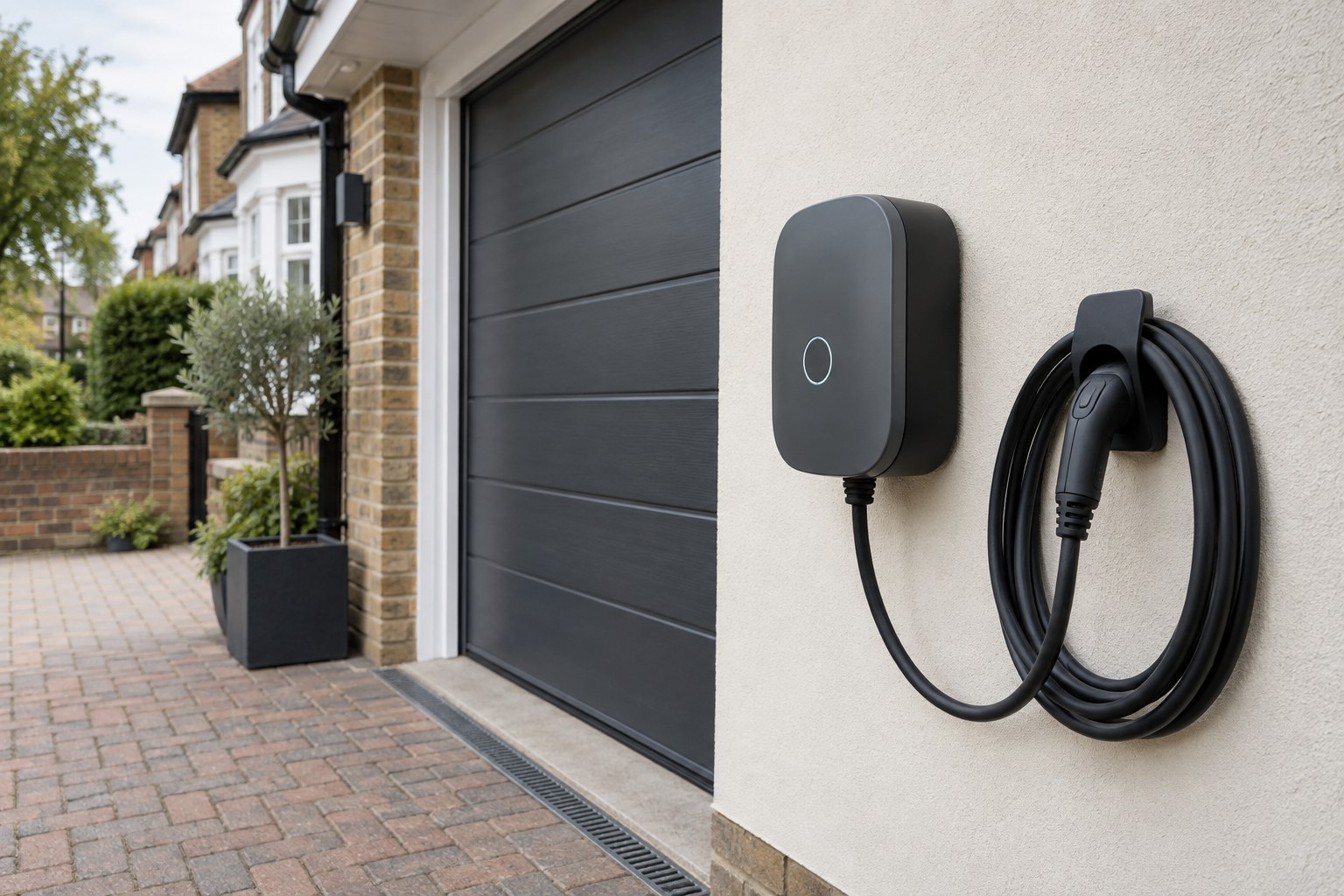
A tethered EV charger has a charging lead permanently attached to the unit. You take the connector from its holder and plug it into the car, then store the cable after use. Most current domestic installations use a Type 2 vehicle connector, but the installer should check your particular car before supplying the unit.
Signs you need tethered EV charger installation
- You prefer a ready-to-use lead beside your regular parking space.
- You find a loose cable awkward to lift from the boot.
- Two household cars park in different positions and need a carefully chosen reach.
- You are replacing a unit whose fixed cable is too short or inconveniently located.
What the survey should cover
Check the actual cable lengths available for the chosen model; 5m, 7.5m and longer options are not universal. Measure the practical route around the vehicle with slack at the connector, rather than a straight line through the car. Longer cables need sensible storage and must not obstruct an entrance or shared path.
Preparing a useful enquiry
Say where the charging port sits on each vehicle, how you normally park and whether the drive is shared. Mention any mobility needs so the unit and holder can be placed within comfortable reach.
London properties range from short driveway runs to garages behind terraces and bays beneath apartment blocks. Give the installer the actual route and access details. You can photograph visible equipment with its covers closed; do not open electrical equipment to collect information.
Indicative London installation costs
The service guide range is £900–£1,600 for supply and installation before any grant. It is an estimate, not a fixed quotation or a maximum. Confirm VAT, the model and all exclusions in the written price. Cable length, charger model and the supply route affect the total. Moving the chargepoint to improve reach may require extra fixed wiring. Ask about the cost and warranty process for replacing a damaged attached lead rather than assuming it can be swapped by the owner.
From survey to handover
- Check the vehicle connector and measure reach for the normal parking direction.
- Agree a mounting position and accessible cable holder away from doors and walking routes.
- Assess supply capacity, earthing and protection and design the new circuit.
- Fit and test the charger, then check the cable reaches without strain.
- Demonstrate holstering, charging controls and safe storage, remove waste and issue the paperwork.
Typical on-site work is around 3–6 hours, depending on the agreed scope. This does not include time waiting for consent, parts or network work. Agree any power interruption and who will complete making-good before the visit.
Leave room to use the driveway
Check the cable position with the car parked before agreeing the final mounting point. The lead should not be stretched, trapped under a garage door or left where tyres run over it. Do not extend it with an ordinary extension lead; discuss a suitable cable length or a different charger position with the installer.
Electrical checks and permissions
A new domestic charger circuit is notifiable work under Part P. Ask how the installer will arrange Building Regulations compliance, usually through a registered competent person scheme or the appropriate building control route. You should receive an Electrical Installation Certificate and the relevant compliance documentation. Approved Document P explains the requirements; scheme registration and electrical certification are not the same as grant authorisation.
The installer should identify the relevant network operator and arrange notification or prior approval as needed. UK Power Networks chargepoint guidance explains its process. A looped supply or a proposed capacity change can affect the timetable; obtain a specific answer about any charges rather than assuming all associated work is free.
Check the necessary landlord, freeholder and planning consents for the proposed position. Listed buildings and installations affecting shared land need particular attention. If you only have street parking, ask the council about public charging or an approved cross-pavement scheme; a loose lead over a footway is not a standard installation arrangement.
Request quotes from London installers
Use one free enquiry to ask for up to four quotations, subject to availability. Ask each business about similar installations, insurance and the support offered after commissioning.
EV Chargers London is a consumer matching service. We do not carry out installations or employ the electricians who quote. Companies joining the network are asked to provide relevant insurance details and references. You choose the installer and contract with that business directly.
Frequently asked questions
Can I change the fixed cable later?
That depends on the model and manufacturer’s instructions. Ask about approved replacement options and costs before buying; cable replacement is not a routine homeowner adjustment.
Will a longer charging lead make charging slower?
A correctly specified lead need not reduce the configured charging rate. It must have a suitable rating and be used as instructed; reach, weight and storage are often the more practical concerns.