
What is untethered EV charger installation?
An untethered EV chargepoint has a socket instead of a permanently attached charging lead. You connect a compatible detachable cable when charging and can put it away afterwards. This can suit a visible front wall or a household that already owns a suitable cable, but the socket and cable both need to match the intended use.
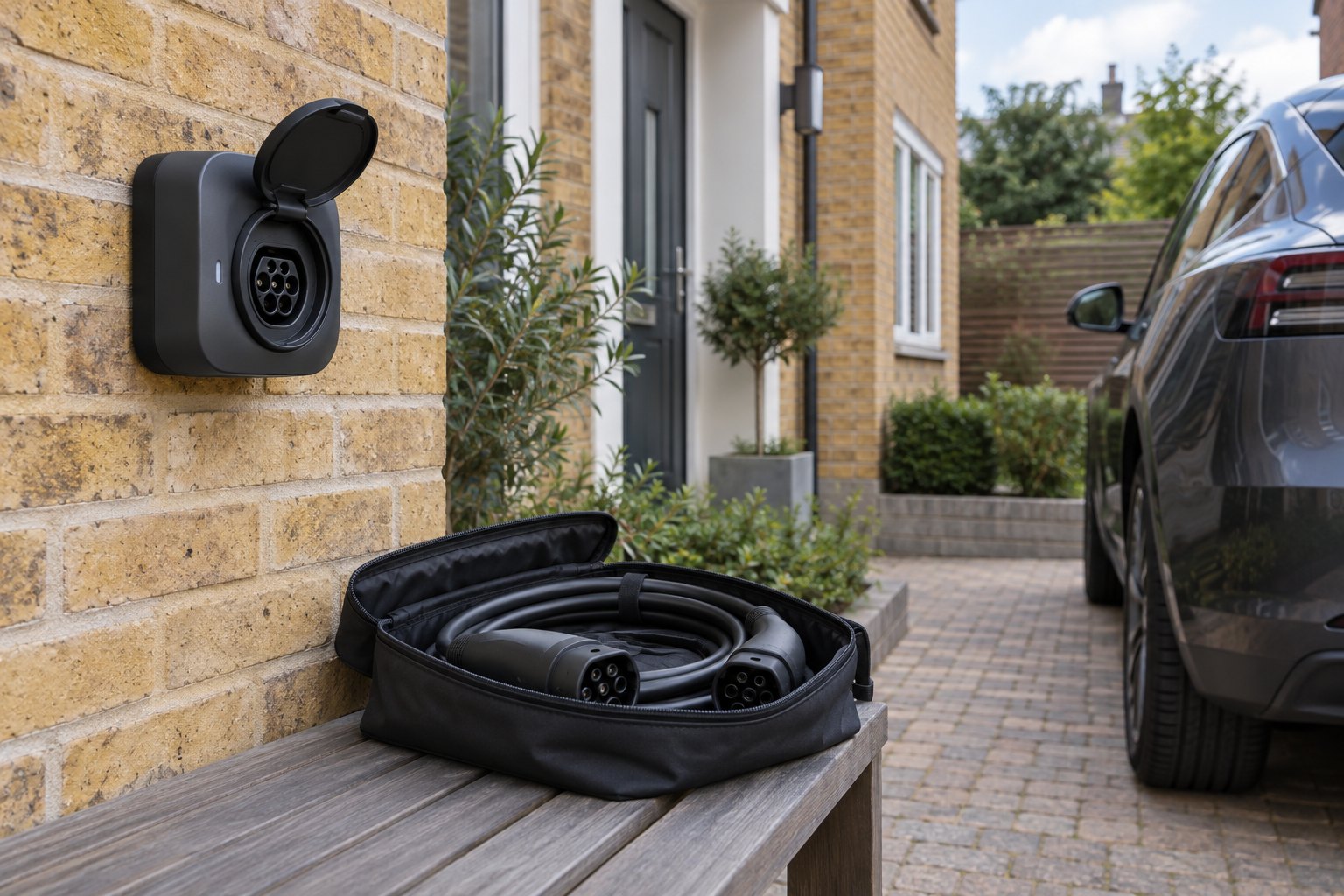
Signs you need untethered EV charger installation
- You prefer a wall unit with no lead hanging beside it between charges.
- You already own a suitable detachable charging cable.
- Several compatible vehicles may use the space over time.
- You want to store the cable in a bag or indoors after charging.
What the survey should cover
Check the detachable cable’s connector types, current rating and usable length. A Type 2 socket does not make every cable or vehicle combination suitable. Some older cars need a different vehicle-end connector. Ask how the socket locks during charging, how it releases and which access controls are available on the chosen model.
Preparing a useful enquiry
Give the make and rating of your existing cable if known, its length and the car model. Describe the preferred wall position and whether you want to keep the unit discreet on a street-facing elevation.
London properties range from short driveway runs to garages behind terraces and bays beneath apartment blocks. Give the installer the actual route and access details. You can photograph visible equipment with its covers closed; do not open electrical equipment to collect information.
Indicative London installation costs
The service guide range is £850–£1,500 for supply and installation before any grant. It is an estimate, not a fixed quotation or a maximum. Confirm VAT, the model and all exclusions in the written price. A detachable cable may be an extra purchase and can remove any saving over a tethered unit. Concealed wiring, a garden-wall position or additional access controls may also change the price. Ask whether the quoted cable is included or merely shown in product pictures.
From survey to handover
- Inspect the intended position and confirm that the selected cable can reach the car.
- Check the socket, vehicle and cable ratings alongside the proposed circuit design.
- Plan the fixed supply route with attention to visible conduit on the front elevation.
- Install and electrically test the unit, then check plug locking and release using a suitable cable.
- Explain the normal stop-and-unplug sequence, demonstrate any app controls and hand over the documents.
Typical on-site work is around 3–6 hours, depending on the agreed scope. This does not include time waiting for consent, parts or network work. Agree any power interruption and who will complete making-good before the visit.
Think about each end of the charging session
An untethered unit means handling the cable when you arrive and leave. Decide where a wet cable will be stored and avoid leaving its connectors on the ground. Follow the manufacturer’s instructions for a cable that will not release; forcing the plug can damage the socket.
Electrical checks and permissions
A new domestic charger circuit is notifiable work under Part P. Ask how the installer will arrange Building Regulations compliance, usually through a registered competent person scheme or the appropriate building control route. You should receive an Electrical Installation Certificate and the relevant compliance documentation. Approved Document P explains the requirements; scheme registration and electrical certification are not the same as grant authorisation.
The installer should identify the relevant network operator and arrange notification or prior approval as needed. UK Power Networks chargepoint guidance explains its process. A looped supply or a proposed capacity change can affect the timetable; obtain a specific answer about any charges rather than assuming all associated work is free.
Check the necessary landlord, freeholder and planning consents for the proposed position. Listed buildings and installations affecting shared land need particular attention. If you only have street parking, ask the council about public charging or an approved cross-pavement scheme; a loose lead over a footway is not a standard installation arrangement.
Request quotes from London installers
Use one free enquiry to ask for up to four quotations, subject to availability. Ask each business about similar installations, insurance and the support offered after commissioning.
EV Chargers London is a consumer matching service. We do not carry out installations or employ the electricians who quote. Companies joining the network are asked to provide relevant insurance details and references. You choose the installer and contract with that business directly.
Frequently asked questions
Is a cable included with a socketed charger?
Not necessarily. Ask for the cable to be listed separately in the quote, including its length and rating, or have the installer confirm that the one you already own is suitable.
Is untethered charging slower?
Not simply because the cable detaches. The vehicle, charger setting, available supply and cable rating determine the charging rate. Compare like-for-like specifications.